 LIFE by Dr. Pat
LIFE by Dr. Pat
Prebiotics and female fertility
A new word after probiotics — so what is it, and how does it help with having a baby?
Several months ago I posted an article about probiotics. Today there is a new word — prebiotics. So what is it, and how does it help you ladies with having a baby?
What are prebiotics?
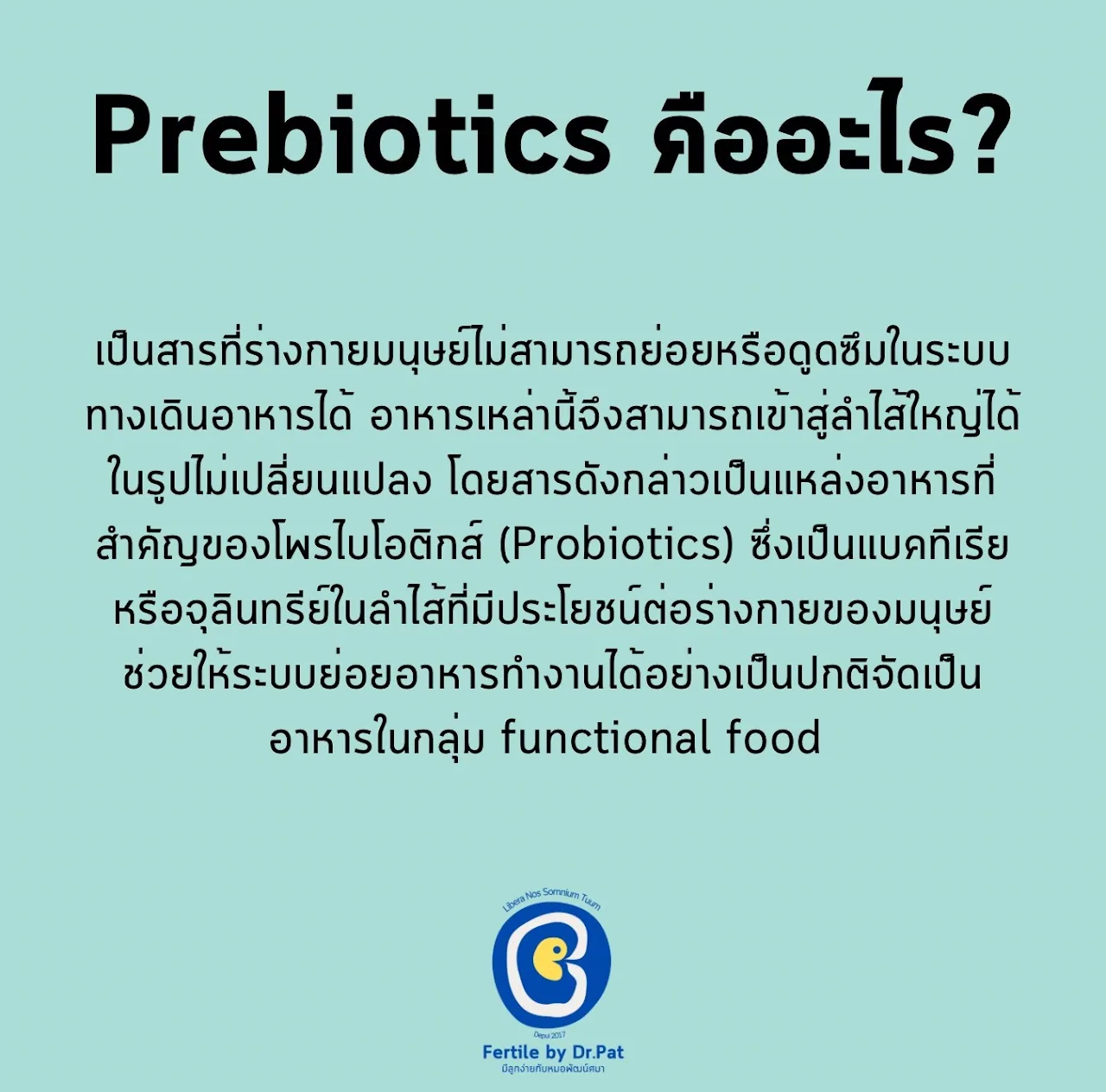
These are substances the human body cannot digest or absorb in the digestive tract, so they reach the large intestine unchanged. They are an important food source for probiotics — the bacteria or microorganisms in the gut that are of benefit to the human body — and they help the digestive system work normally. They are classed as functional food.
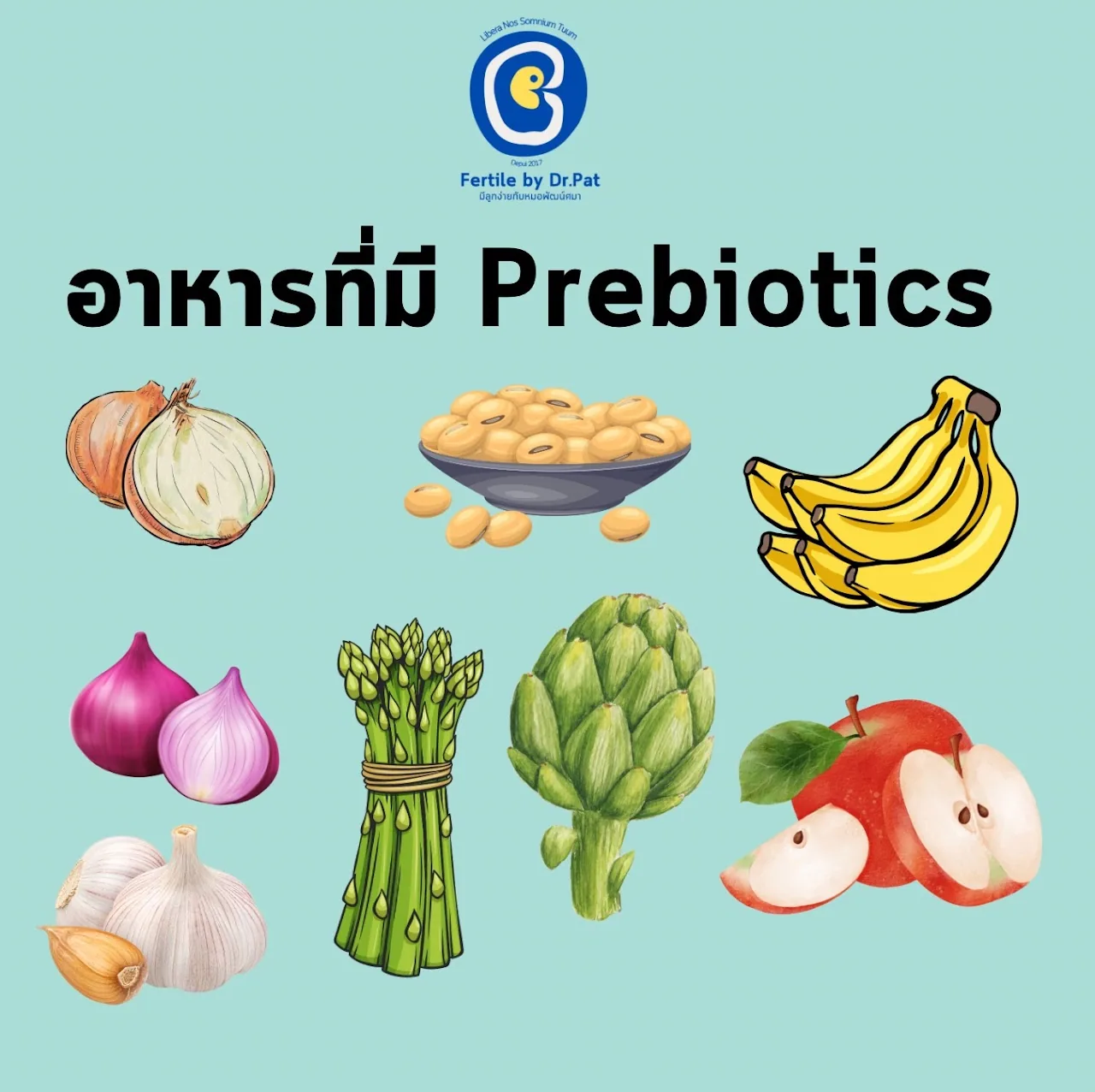
Foods that contain prebiotics
Found in certain vegetables, fruits and grains, such as:
- onion
- garlic
- soybeans
- red beans
- chicory root
- artichoke
- asparagus
- banana
- apple
What are probiotics?
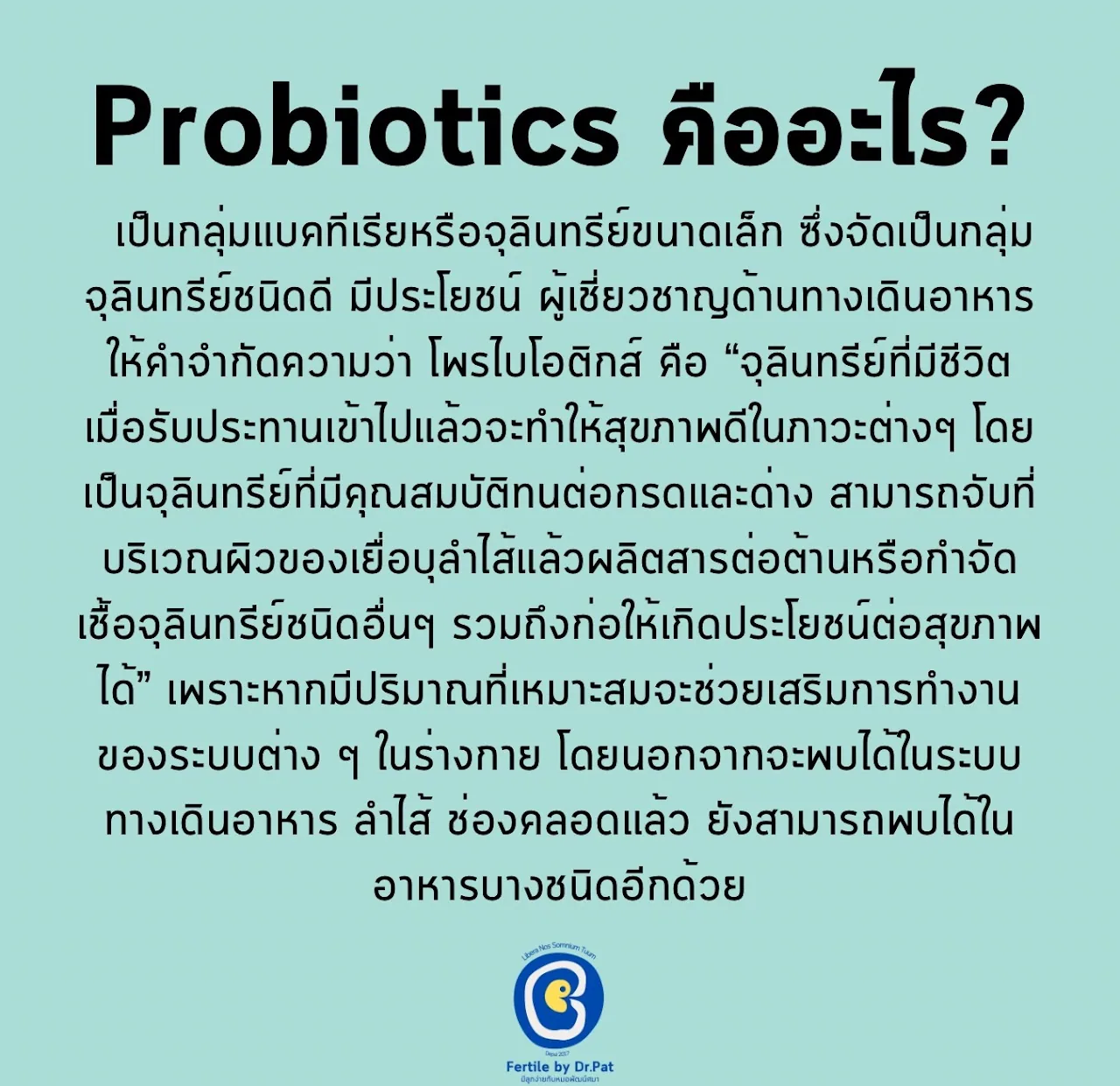
These are small bacteria or microorganisms, counted among the good and useful ones. Specialists in the digestive tract define probiotics as “living microorganisms which, once eaten, bring good health in a variety of conditions; they tolerate acid and alkali, can attach to the surface of the intestinal lining and produce substances that oppose or eliminate other microorganisms, and can bring benefit to health.” In a suitable amount they support the working of the body's various systems. Besides the digestive tract, the intestine and the vagina, they can also be found in certain foods.
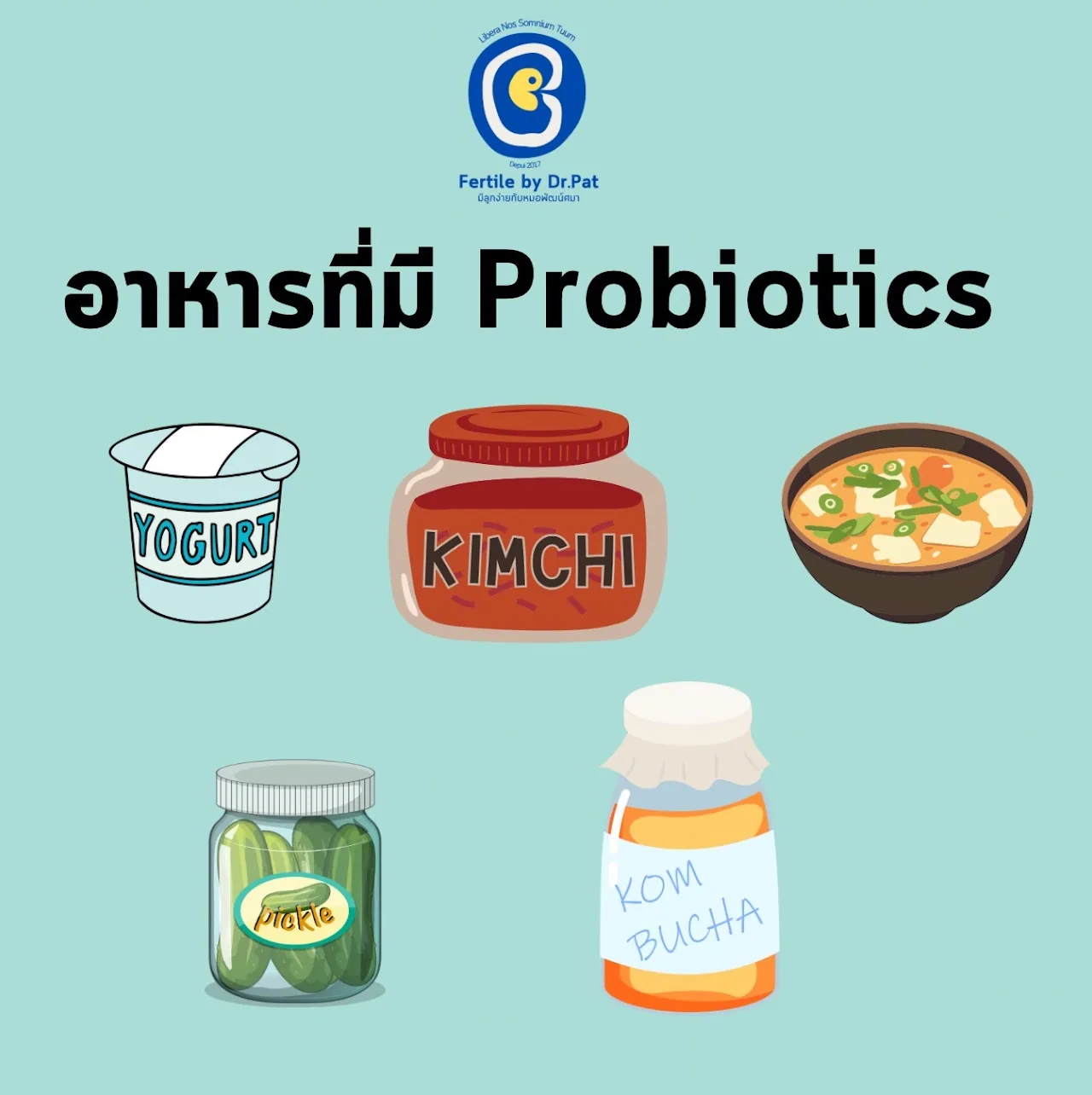
Foods that contain probiotics
Found in foods such as:
- fermented milk drinks
- yoghurt
- kimchi
- pickled cucumber
- miso
- fermented tea
What prebiotics + probiotics are good for
Prebiotics are classed as functional food because they are good for health: they stimulate the activity and encourage the growth of probiotic microorganisms, such as the lactic acid bacteria — lactobacillus and bifidobacteria.
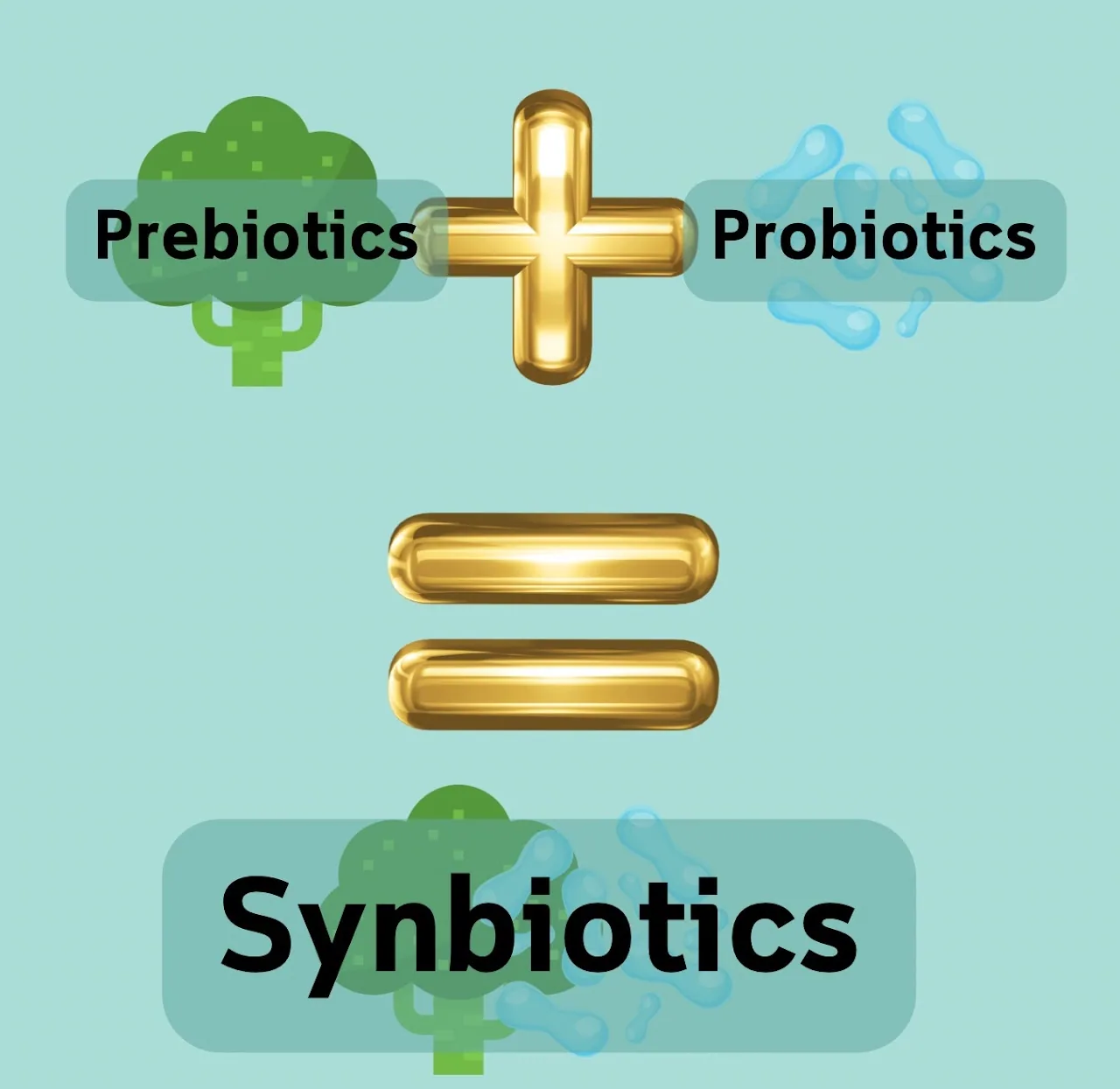
When prebiotics and probiotics work together they are called synbiotics, and the body gains a great deal: the person's health improves, the growth of microorganisms in the digestive tract is stimulated to the right level, and the probiotics carry out their breakdown work within a competitive microbial ecosystem. What follows from that is:
- The lactic acid the microorganisms make inhibits the growth of bacteria that cause disease (pathogens) and produce toxins, such as Clostridium perfringens and Salmonella, and helps prevent and reduce the symptoms of infection in the digestive tract.
- Lowers the level of cholesterol, phospholipid and triglyceride in the blood: Lactobacillus acidophilus, a microorganism of the bifidobacteria group living in the intestine, helps break cholesterol down and blocks its absorption through the intestinal wall.
- Makes the absorption of food in the intestine work better and eases constipation, because the organic acids that bifidobacteria produce stimulate the intestine to contract and add moisture to the stool, so it passes more easily.
- Increases the absorption of calcium in the digestive system.
- Can produce vitamin B1, vitamin B2, vitamin B6, vitamin B12, nicotinic acid and folic acid, which play an important part in treating allergy and in building up the development of the immune system.
Prebiotics + probiotics and female fertility
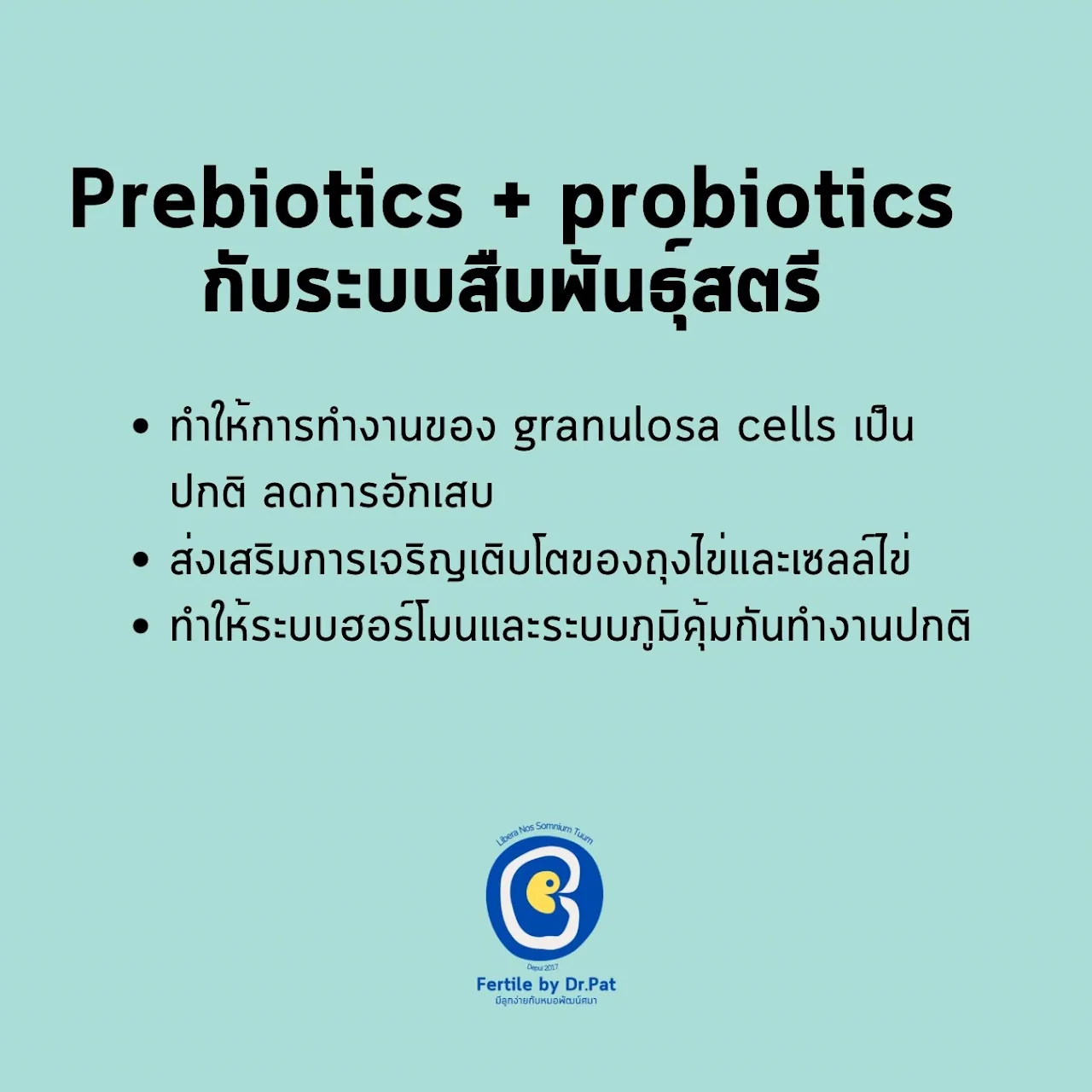
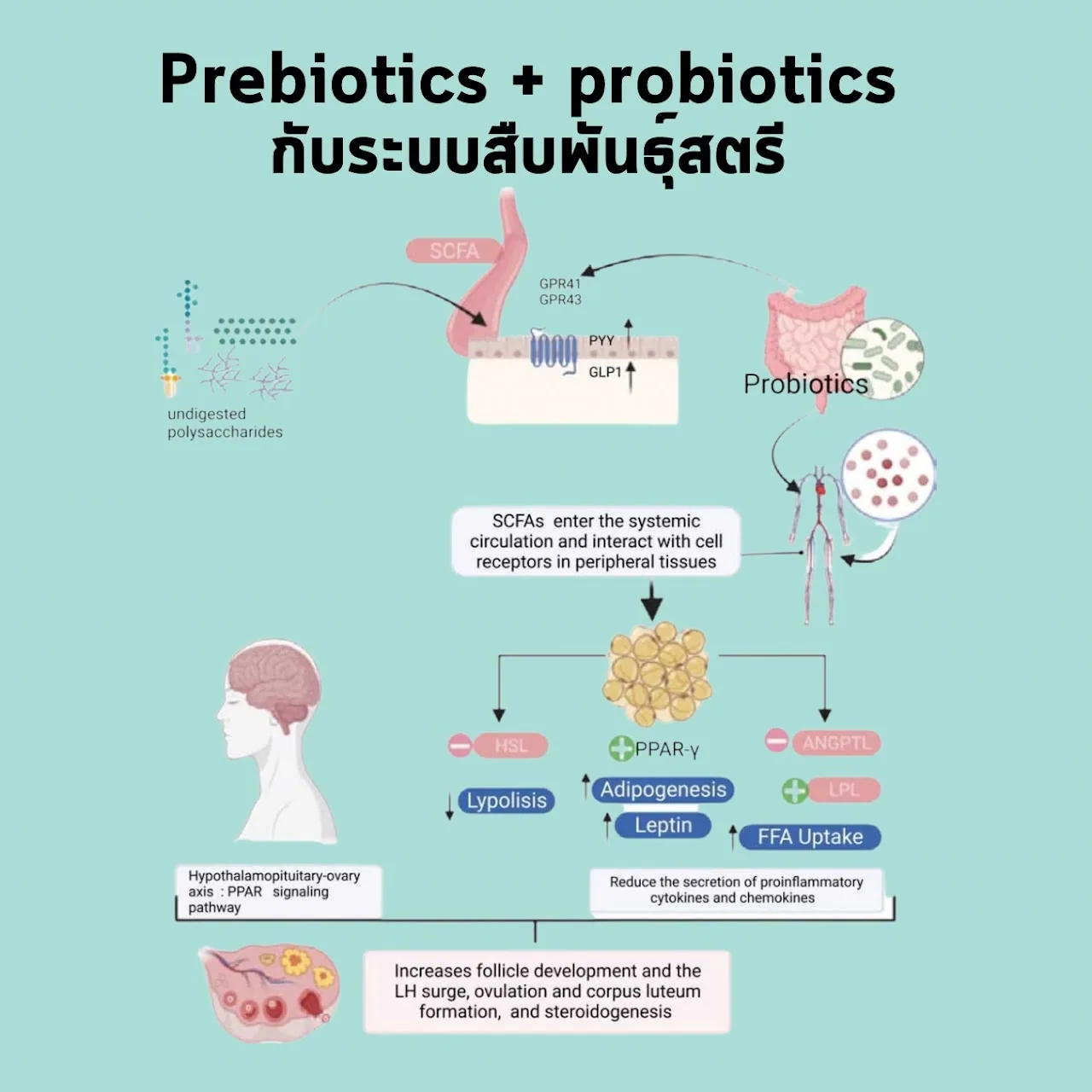
Studies have found that taking prebiotics and probiotics helps reduce inflammation and lets ovulation happen normally, because:
- It brings the working of the granulosa cells back to normal and reduces inflammation.
- It supports the growth of the follicles and of the egg cells.
- It lets the hormone system and the immune system work normally.
The article also carries two mechanism diagrams, with their labels in English. This is what the text in them says.
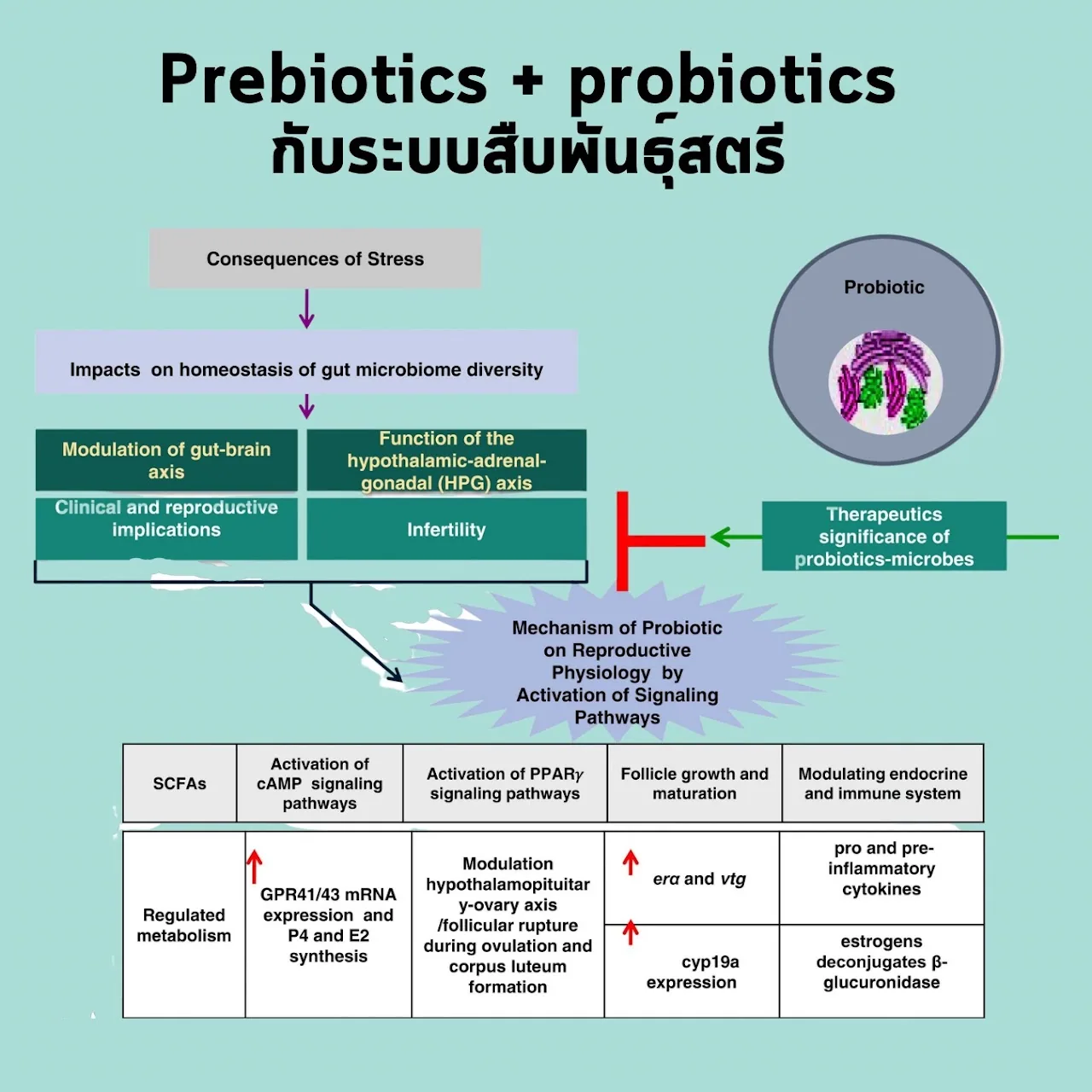
| SCFAs | Activation of cAMP signaling pathways | Activation of PPARγ signaling pathways | Follicle growth and maturation | Modulating endocrine and immune system |
|---|---|---|---|---|
| Regulated metabolism | ↑ GPR41/43 mRNA expression and P4 and E2 synthesis | Modulation hypothalamopituitary-ovary axis / follicular rupture during ovulation and corpus luteum formation | ↑ erα and vtg · ↑ cyp19a expression | pro and pre-inflammatory cytokines · estrogens deconjugates β-glucuronidase |
In short
You could say it makes you healthy from the inside — and fertility comes along with it.
With my best wishes — Dr. Patsama Vichinsartvichai · 4 September 2023
References
- Rani, K., Kaur, G., & Ali, S. A. (2023). Probiotic-prebiotic therapeutic potential: A new horizon of microbial biotherapy to reduce female reproductive complications. PharmaNutrition, 24, 100342. https://doi.org/10.1016/j.phanu.2023.100342
- ศูนย์ข้อมูลยาโรงพยาบาลบำรุงราษฎร์. (2562). โพรไบโอติกส์และพรีไบโอติกส์ ต่างกันอย่างไร? สืบค้น 23 พฤษภาคม 2565, จาก https://www.bumrungrad.com/th/health-blog/july-2019/probiotics-and-prebiotics
- prebiotics
- probiotics
- synbiotics
- functional food
- gut microbiome
- inflammation
- ovulation
- female fertility