 LIFE by Dr. Pat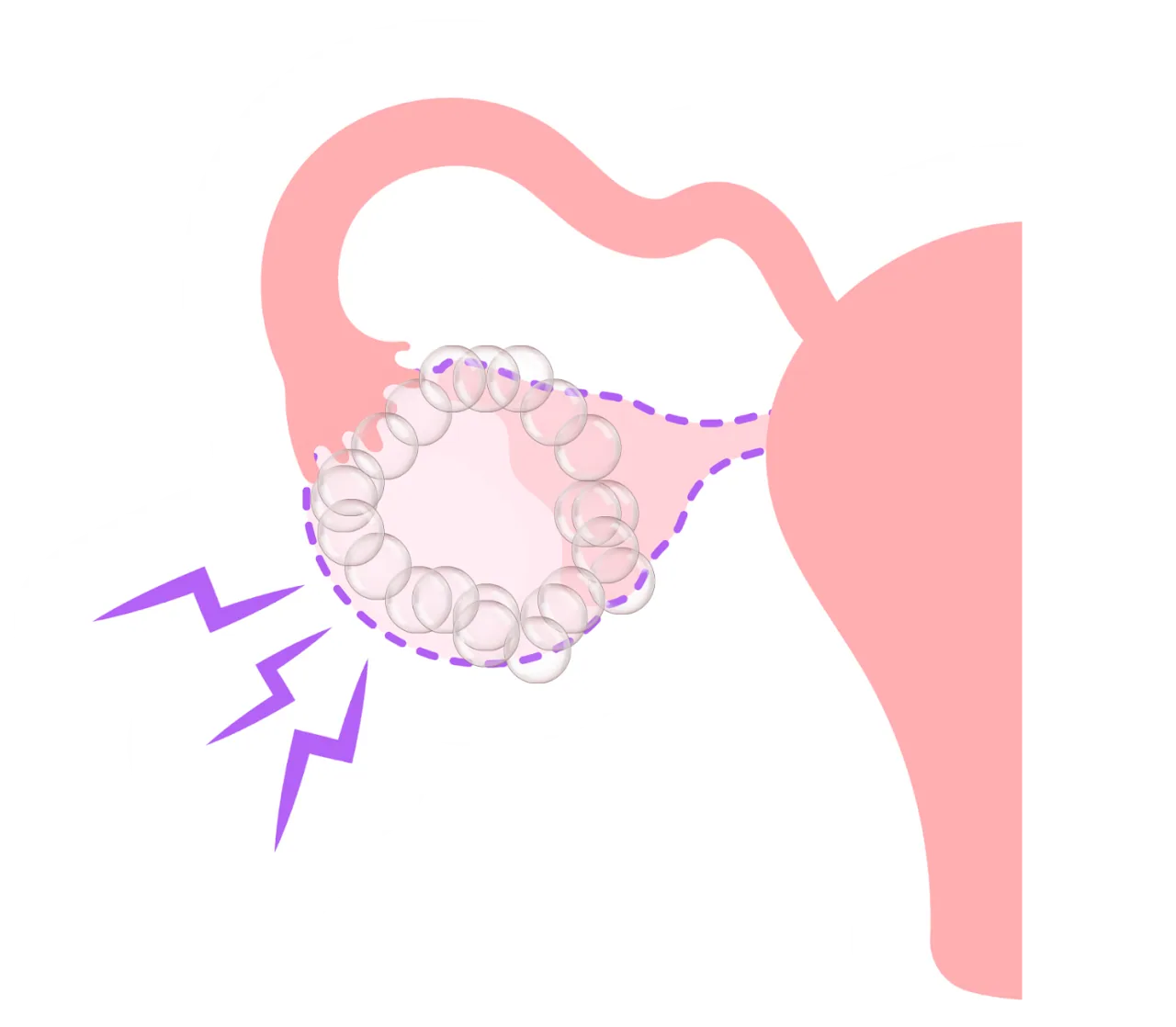
LIFE by Dr. Pat
Polycystic ovary syndrome (PCOS)
What PCOS actually is
I expect a good many of my fertility patients have been told at some point that they have PCOS (polycystic ovary syndrome). Some are puzzled — why do my eggs hardly ever get released when my period comes every month? Some had an ultrasound in their early twenties and were told they had a lot of follicles, so it was probably PCOS. And some really do have PCOS. Today let us look at what PCOS actually is.
How PCOS is diagnosed
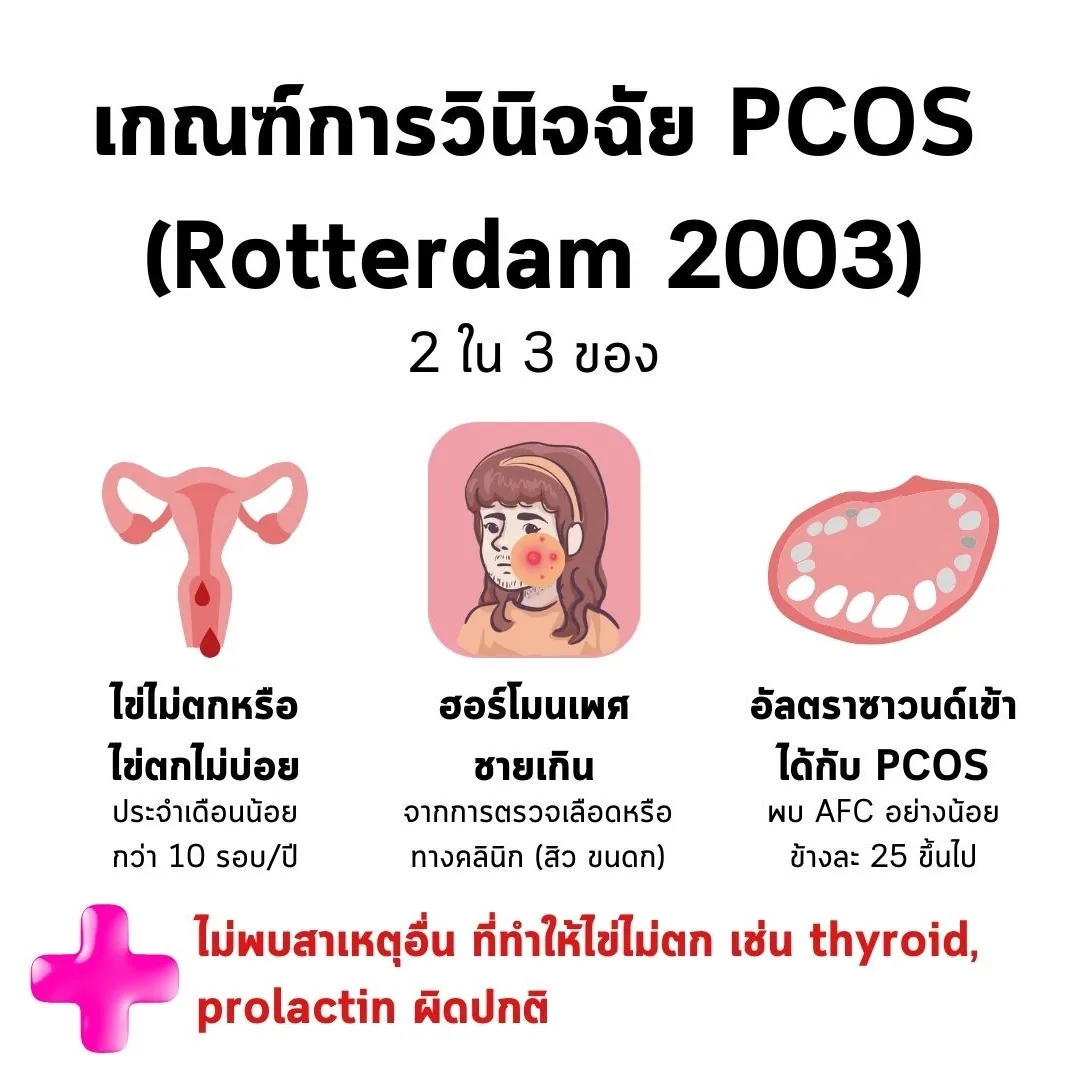
There are several sets of diagnostic criteria for PCOS. The one in widest use is Rotterdam 2003, drawn up jointly by the European Society for Human Reproduction and Embryology (ESHRE) and the American Society for Reproductive Medicine (ASRM).
Rotterdam 2003 asks for two out of the following three:
- No ovulation, or infrequent ovulation — fewer than 10 cycles a year.
- Excess male hormone — on a blood test, or clinically (acne, excess hair).
- An ultrasound consistent with PCOS — an AFC of at least 25 on each side.
Before any of that counts, the other conditions that give the same picture as PCOS have to be looked for and ruled out: no other cause of anovulation, such as an abnormal thyroid or prolactin.
Other conditions that look like PCOS
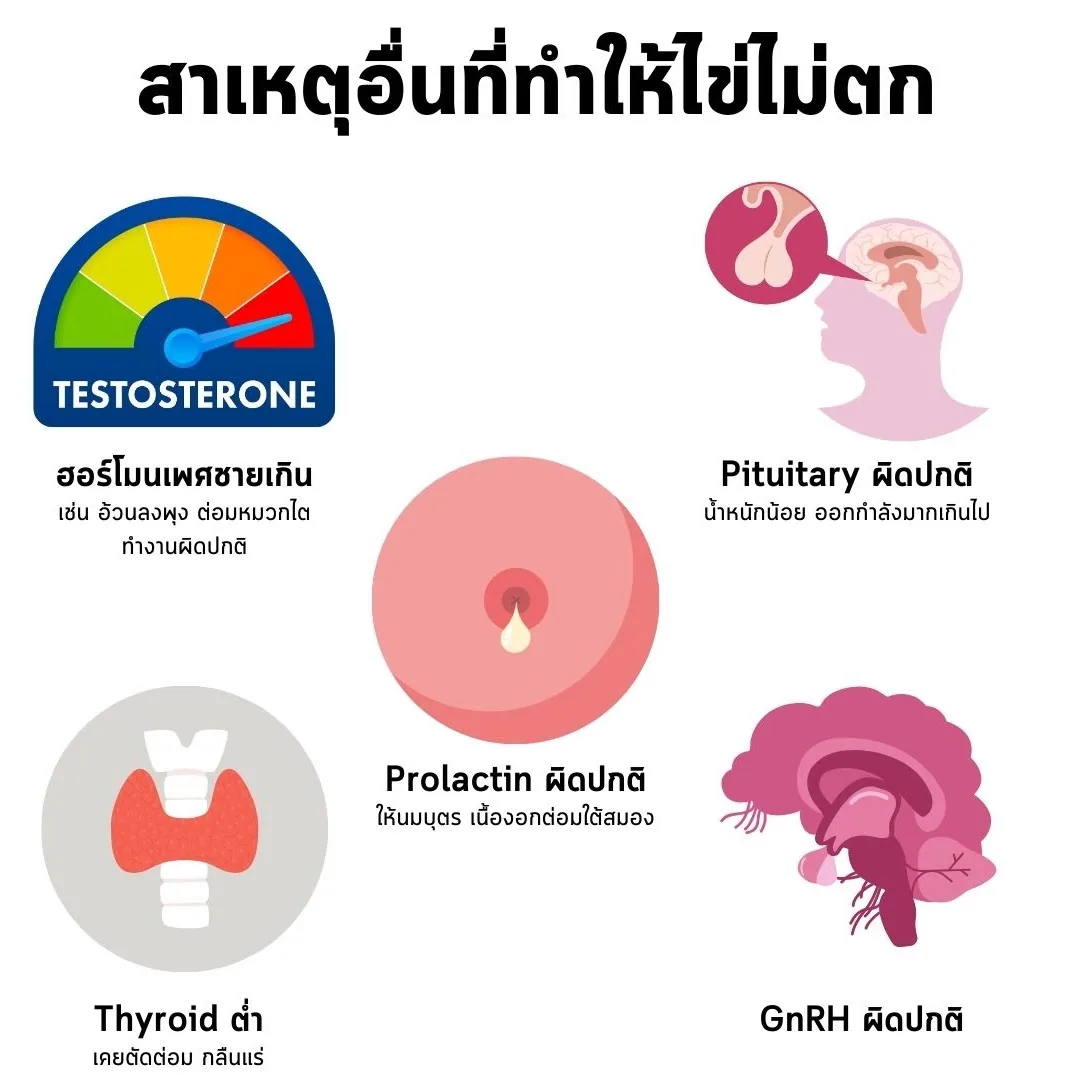
Plenty of conditions produce a picture that looks like PCOS. Further tests are needed to tell them apart and to treat each one properly.
- Excess male hormone — central obesity, for instance, or an adrenal gland that is not working properly.
- An abnormal Pituitary — low body weight, too much exercise.
- Abnormal Prolactin — breastfeeding, a tumour of the pituitary gland.
- A low Thyroid — the gland removed, or radioiodine treatment.
- Abnormal GnRH.
The ones that commonly turn up are:
- Low thyroid hormone (hypothyroidism) — having had the thyroid gland taken out, or having been treated for an overactive thyroid with radioiodine.
- A pituitary tumour that makes prolactin (prolactinoma) — prolactin runs high and suppresses FSH and LH, so ovulation does not happen. There may be milk leaking and tender breasts.
- Congenital adrenal hyperplasia (CAH), the kind that only shows itself in adulthood — a congenital defect in the enzymes involved in making sex hormones, so the synthesis of female hormone goes wrong and male hormone builds up.
- Body weight that is too low — for instance anorexia nervosa or bulimia nervosa.
- Exercising far too hard — athletes, ballet dancers.
How PCOS comes about
We still do not know exactly what causes PCOS. The hypothesis is that it begins with central obesity: fat inside the abdomen brings on insulin resistance, the pituitary gland then works abnormally, and the follicles cannot grow far enough to ovulate.
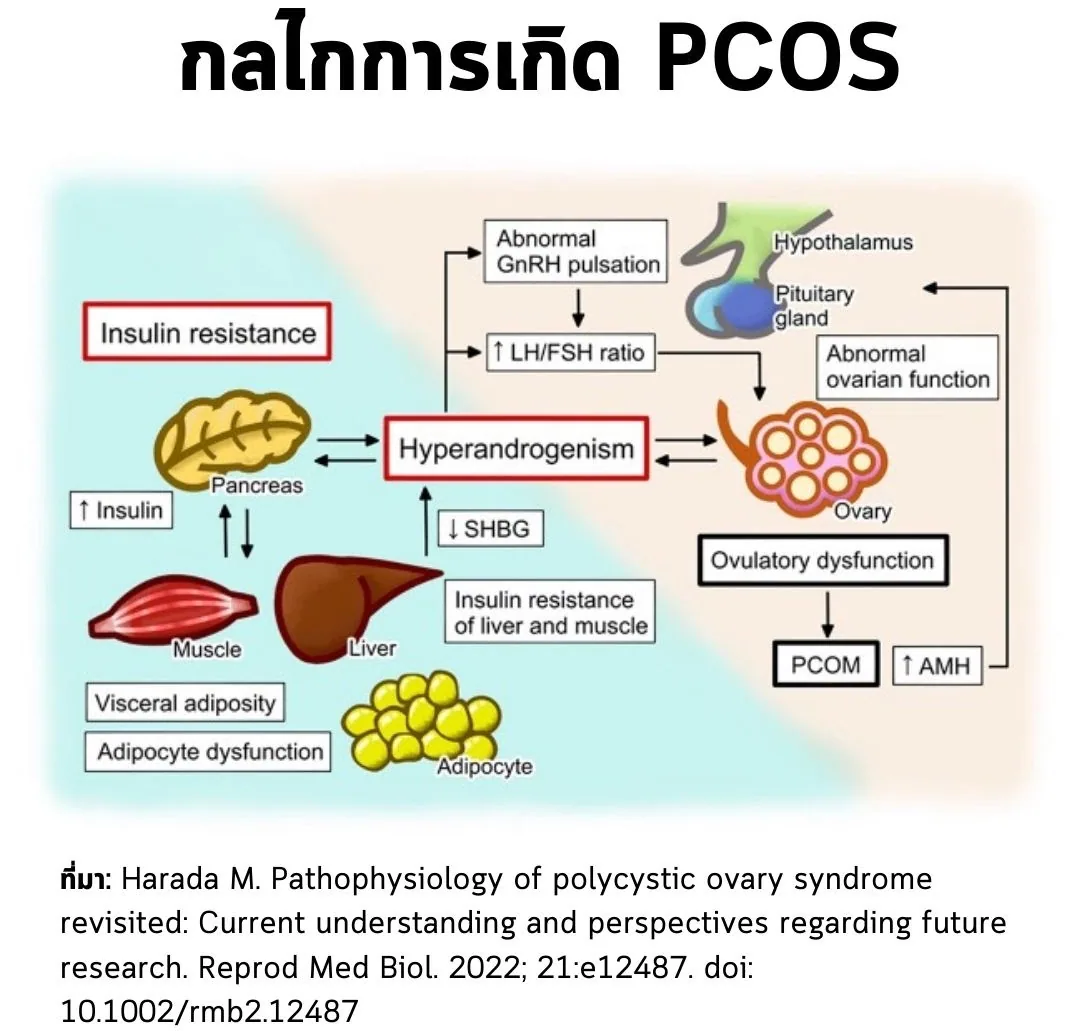
In the diagram above the sequence runs like this:
- Visceral adiposity and adipocyte dysfunction lead to insulin resistance in the liver and muscle, and insulin rises.
- The raised insulin, together with a fall in SHBG, produces hyperandrogenism.
- Abnormal GnRH pulsation raises the LH/FSH ratio.
- The ovary works abnormally, ovulatory dysfunction follows, and with it the PCOM appearance of the ovary and a raised AMH.
Treating PCOS
How PCOS is treated depends on the symptoms, and on the patient's own goals for having a child.
The principle is to get ovulation back to normal, or at the very least to get the periods coming regularly. There are a number of ways to do that, and they can be used together.
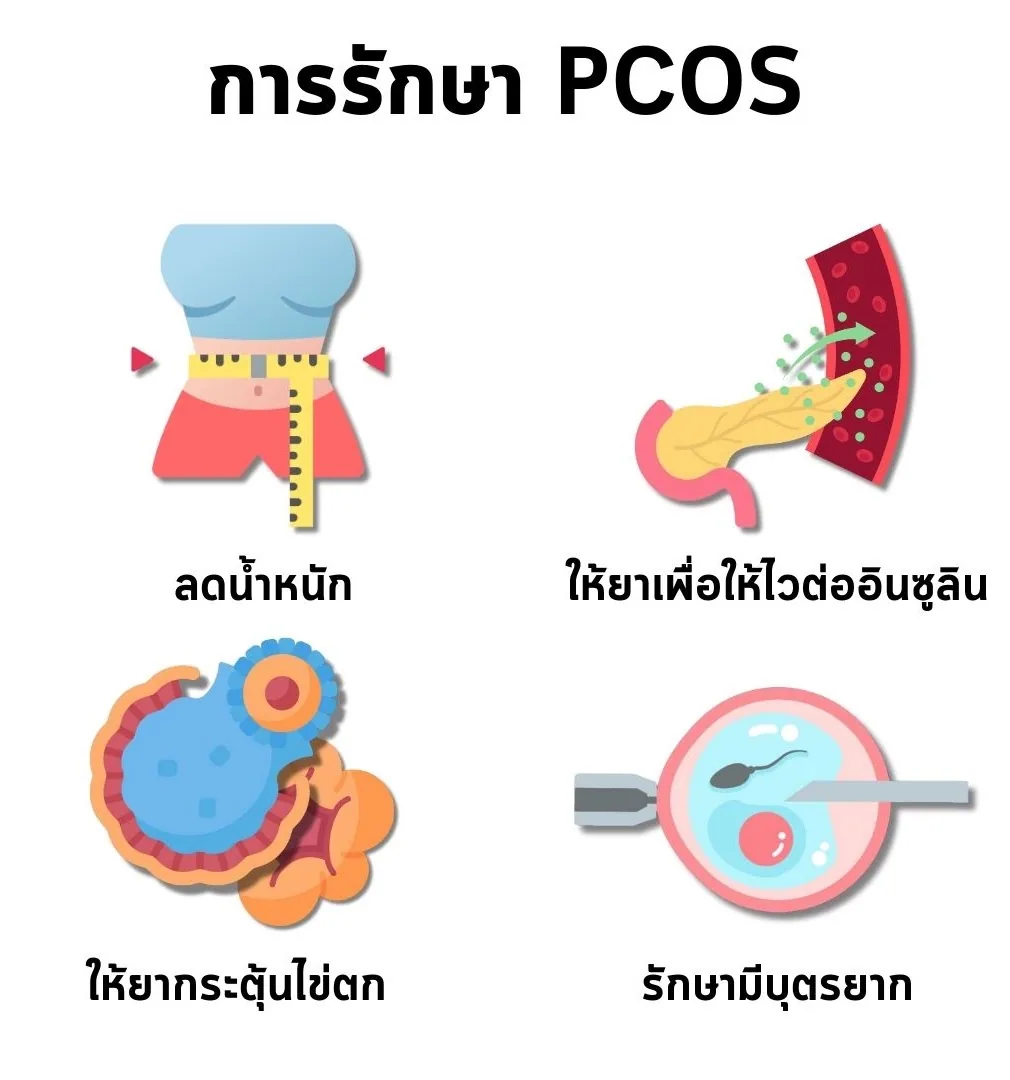
- Lose weight, the belly in particular — by watching what you eat, cutting starch and sugar, and exercising more. The emphasis is on the weight coming down slowly (about 0.5 kg a month) and on holding on to what you have lost. Losing at least 5% of your current weight is enough to bring ovulation back to normal.
- Get the periods coming regularly. Because PCOS means ovulation fails for long stretches, the lining of the womb is under oestrogen stimulation the whole time with no progestogen to shed the whole cavity the way a normal period does. That raises the risk of the lining thickening abnormally, and of endometrial cancer. Hormones given to bring the periods back on schedule can help — cyclical progestogen, or the contraceptive pill for someone who does not want to conceive.
- Medication that makes the body respond better to insulin, such as metformin.
- Drugs that make the follicles grow and release an egg, such as clomiphene citrate or letrozole, where the patient wants a child. This can be combined with intrauterine insemination (IUI).
- IVF.
Dr. Patsama Vichinsartvichai · 18 December 2023
- PCOS
- Anovulation
- Infrequent periods
- Excess hair
- Acne
- Hypothyroidism
- Insulin resistance
- Infertility