 LIFE by Dr. Pat
LIFE by Dr. Pat fertility clinic
Genetics 101 — the infertility edition
Genetic 101 Infertility Edition
Almost every medical innovation these days seems to involve genes and genetics. I suspect many patients find the vocabulary bewildering.
Cells, the nucleus and chromosomes
Under the microscope the most conspicuous part of a cell is the nucleus — and it is also the most important. It sits at the centre of the cell, wrapped in a membrane that holds all the chromosomes inside.
Each cell holds 23 pairs of chromosomes — one set inherited from the mother and one from the father. This information sits inside every cell of the body.
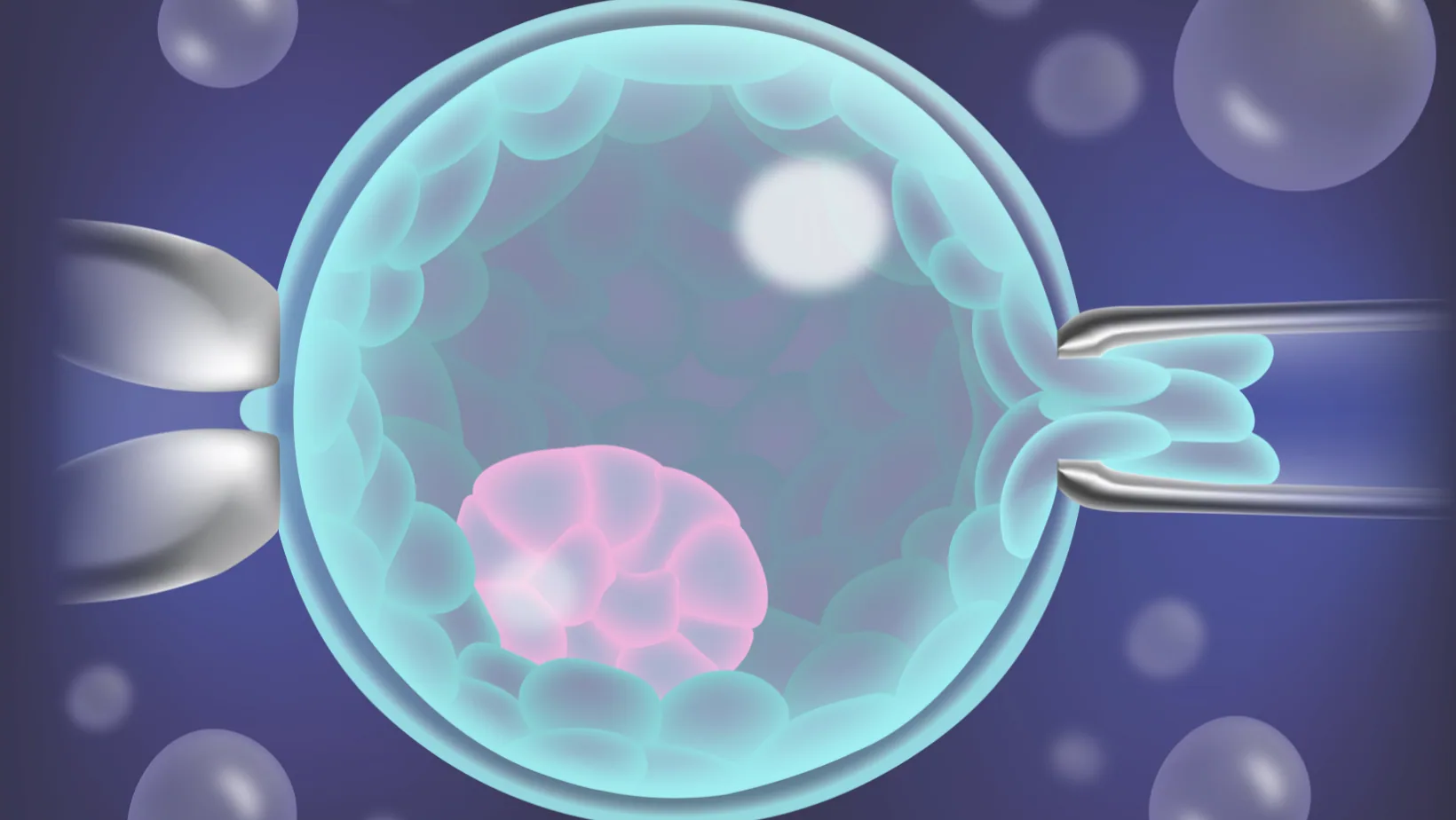
Testing embryos for chromosome number (PGT-A)
PGT-A rests on the principle that only chromosomally normal embryos implant and go on to produce a healthy baby. It is performed by biopsying 5–10 trophectoderm cells from a blastocyst-stage embryo.
Some chromosome abnormalities, however, are still compatible with implantation, with carrying to term, and with the birth of an affected child. These involve:
- Chromosome 13 — Patau syndrome
- Chromosome 18 — Edwards syndrome
- Chromosome 21 — Down syndrome
- X/Y — Turner syndrome, Klinefelter syndrome
What genes are
A gene is a package of information specifying a particular characteristic of the body — hair colour, eye colour, how an enzyme works. Some functions depend on several genes working together.
Faults in genes cause inherited disease. These fall into four patterns.
| Inheritance pattern | Example diseases |
|---|---|
| Autosomal dominant | Huntington’s disease, Marfan syndrome |
| Autosomal recessive | Thalassaemia, cystic fibrosis, sickle cell anaemia |
| X-linked dominant | Fragile X syndrome, incontinentia pigmenti |
| X-linked recessive | Haemophilia A, Duchenne muscular dystrophy (DMD) |
The human genome contains roughly 20,000 genes, so testing an embryo's chromosomes does not cover this level at all. Specific genes can be tested, though, when a couple is known to be at risk of passing on an inherited disease.
What embryo chromosome testing does tell you
It tells you
- Whether the chromosomes of the 5–10 cells that were biopsied are normal or abnormal
It does not tell you
- That the whole embryo has normal chromosomes
- That the baby born from this embryo will have normal chromosomes
- Anything about other inherited diseases
- That the child will be free of genetic disease
What embryo chromosome testing does for treatment
It helps
- Shortens the time to pregnancy
- Lowers the miscarriage rate
It does not help
- It does not raise the overall chance of pregnancy
- It does not reduce pregnancy complications such as gestational diabetes or pre-eclampsia