LIFE by Dr. Pat

What the first pregnancy hormone test after embryo transfer tells you

One hCG draw tells you one thing: pregnant, or not pregnant.

← Back to articles

Lately a lot of patients have come to see me after having their pregnancy hormone (Human Chorionic Gonadotropin; hCG) measured — some having decided for themselves that the number is too low, some told by a member of the medical staff that the level looks too low. Either way it leaves the patient anxious, and her family with her.

I want to tell everyone to take it easy first. Today I am going to explain it to you in pictures.
The opening card — an illustration of a pregnant woman with her hand on her bump, with the words “What does one hCG blood test tell you?” and the *Fertile with Dr. Pat* logo.
The opening card — an illustration of a pregnant woman with her hand on her bump, with the words “What does one hCG blood test tell you?” and the Fertile with Dr. Pat logo.

What hCG is

hCG — human Chorionic Gonadotropin — is the hormone that tells you a pregnancy is there, because it is made by the cells of the placenta.
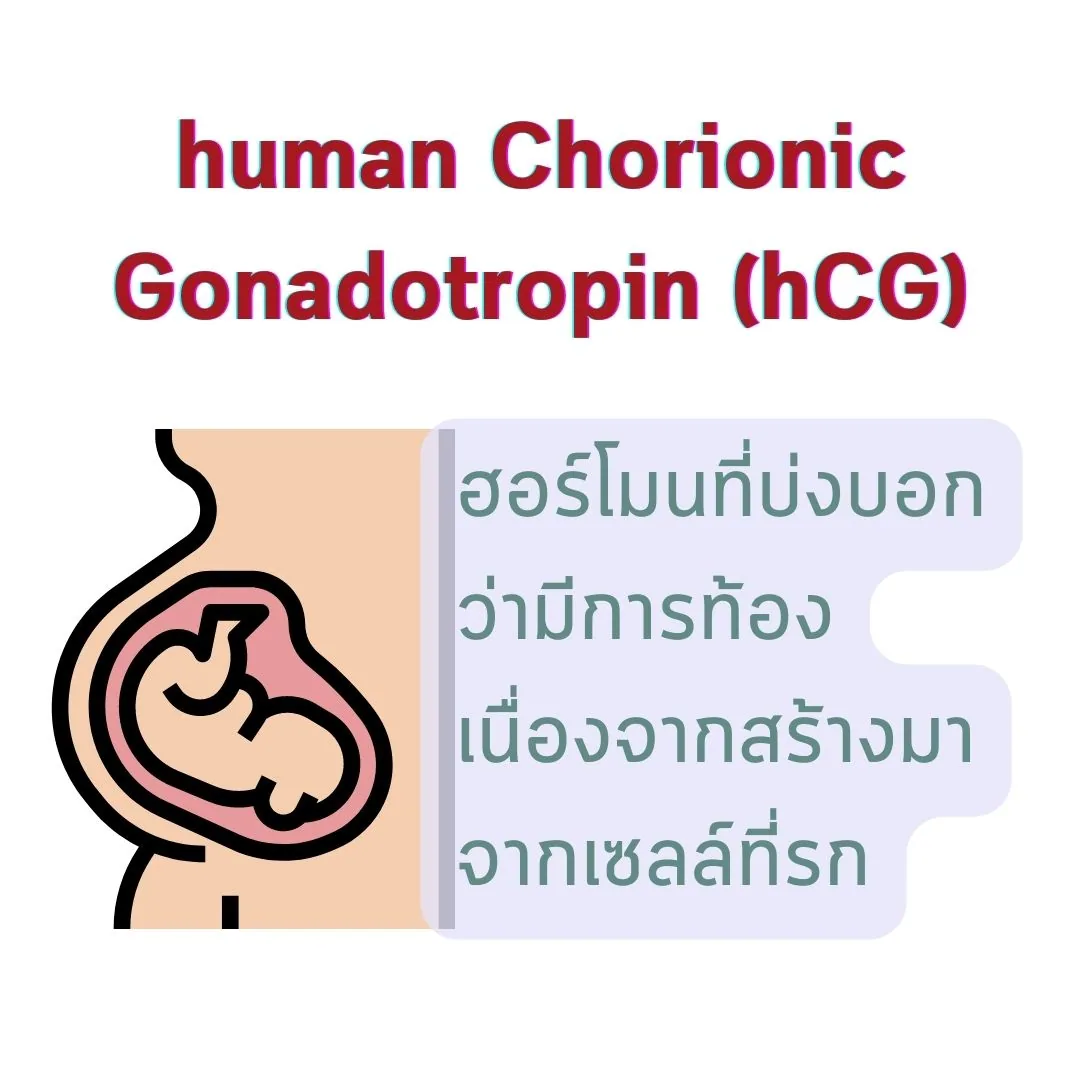
The slide explaining human Chorionic Gonadotropin (hCG): a drawing of a pregnant abdomen with the baby inside the womb, beside the words saying this is the hormone that shows a pregnancy is there, because it is made by the cells of the placenta.

Normal hCG ranges at different gestational ages

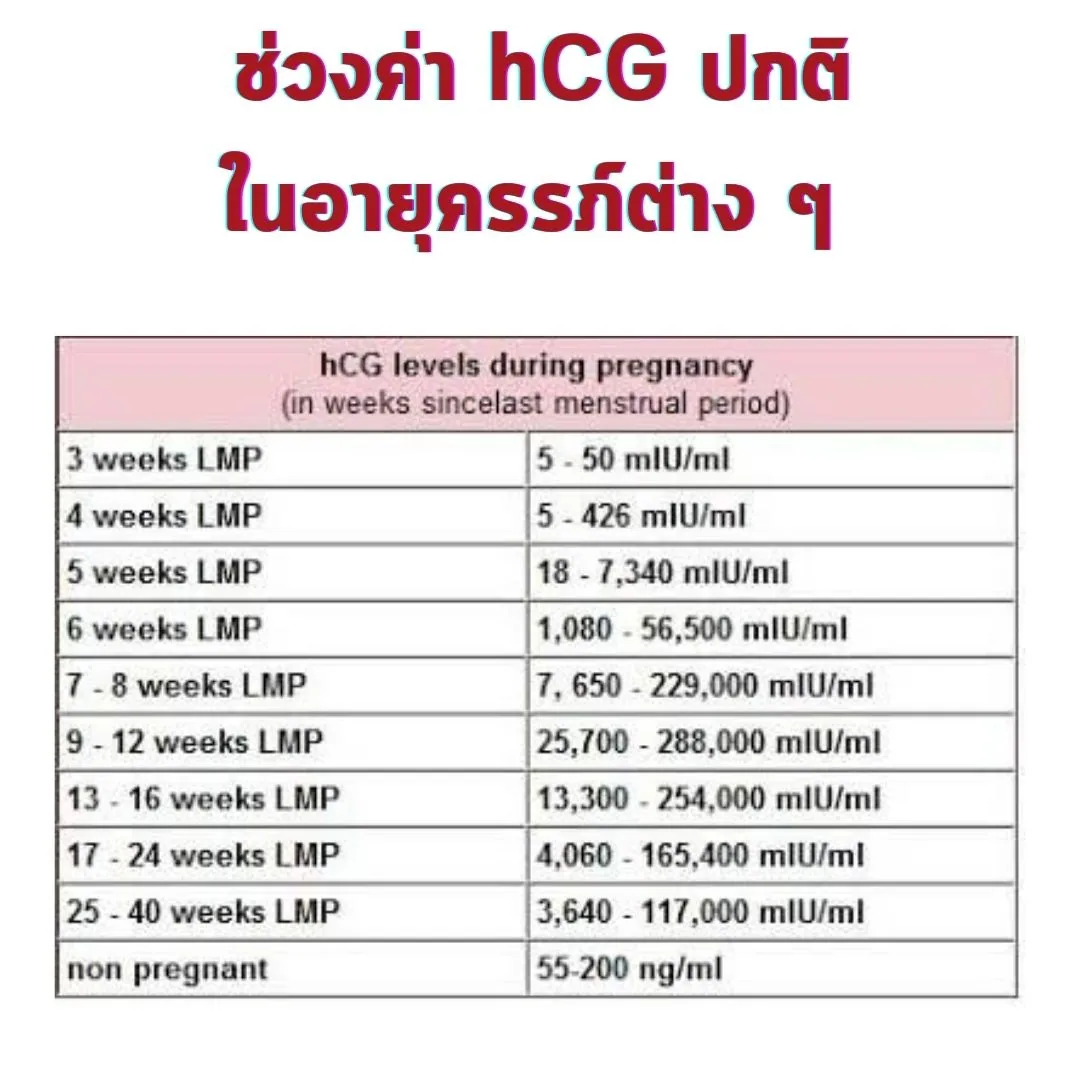
Here are hCG values at different gestational ages. Notice how very wide the normal range is.

Normal hCG ranges, with gestational age counted from the last menstrual period (LMP) — as printed in the original slide.
Gestational age (LMP)hCG level
3 weeks5 – 50 mIU/ml
4 weeks5 – 426 mIU/ml
5 weeks18 – 7,340 mIU/ml
6 weeks1,080 – 56,500 mIU/ml
7 – 8 weeks7,650 – 229,000 mIU/ml
9 – 12 weeks25,700 – 288,000 mIU/ml
13 – 16 weeks13,300 – 254,000 mIU/ml
17 – 24 weeks4,060 – 165,400 mIU/ml
25 – 40 weeks3,640 – 117,000 mIU/ml
not pregnant55 – 200 ng/ml
The slide titled “Normal hCG ranges at different gestational ages” — a two-column table, gestational age counted from the last menstrual period on the left, the hCG range on the right.

What to notice

The normal range is enormously wide. At five weeks of gestation, for instance, an hCG can be anywhere from 18 all the way up to over seven thousand.

A single hCG draw tells you only whether you are pregnant or not. It does not tell you whether the pregnancy is inside the womb or outside it, whether it has taken well or taken badly.

  1. One hCG draw tells you only whether you are pregnant or not.
  2. One hCG draw cannot tell you the gestational age, and cannot be used to predict how that pregnancy will grow either.
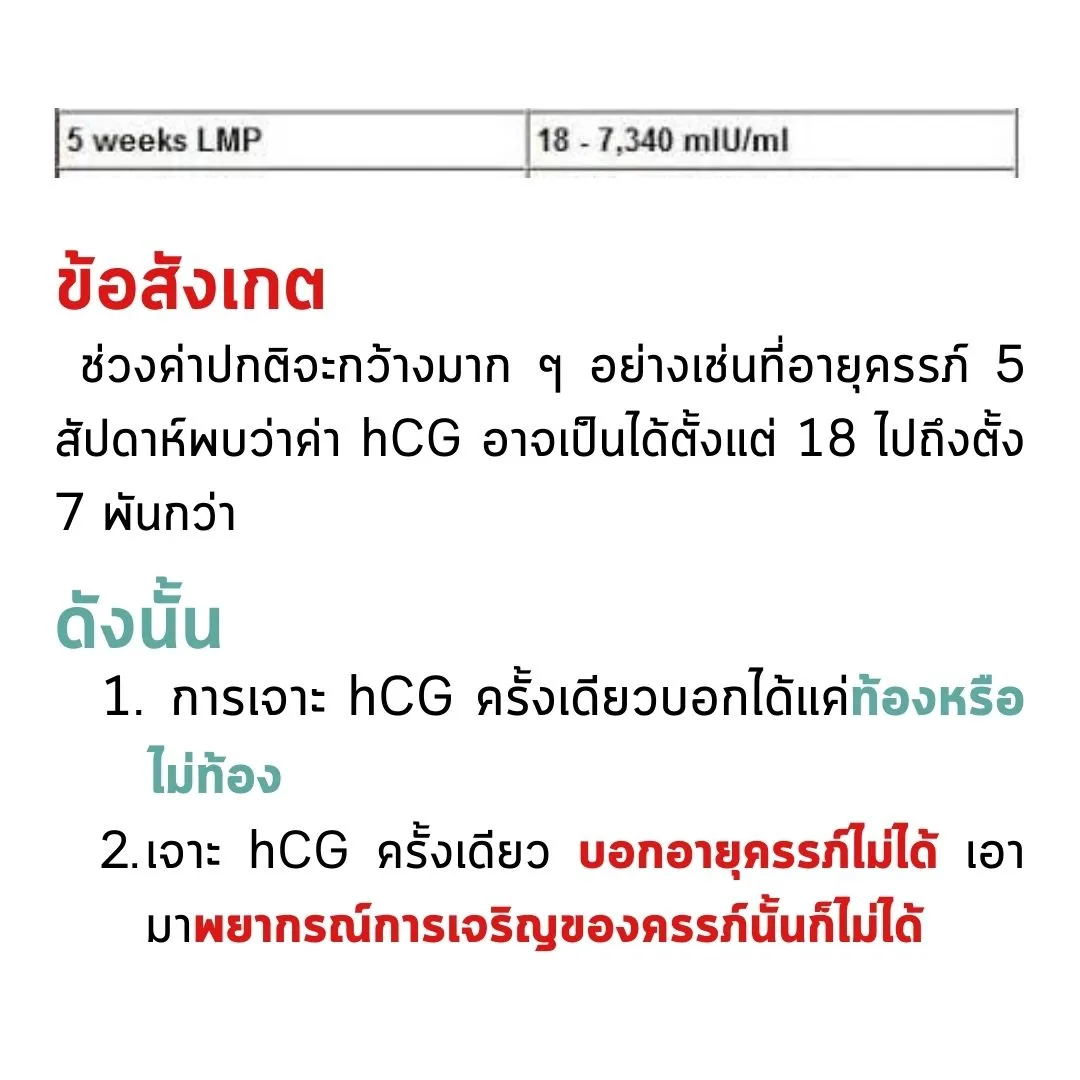
The slide headed “What to notice” and “Therefore”. At the top it lifts one row out of the table — 5 weeks LMP at 18 – 7,340 mIU/ml — then sets out the two conclusions: a single draw tells you only pregnant or not, and it cannot give the gestational age or predict how the pregnancy will grow.

So how do you find out the gestational age?

So if you want to know how many weeks along you are, or whether the pregnancy is growing well — how would you know?

The question slide — three big question marks, with the line underneath: “So if you want to know how many weeks along you are, or whether the pregnancy is growing well, how would you know?”

How hCG changes across a pregnancy

What we find is that in the first trimester hCG climbs quickly, up to ten weeks of gestation, and after that it comes down again, slowly.
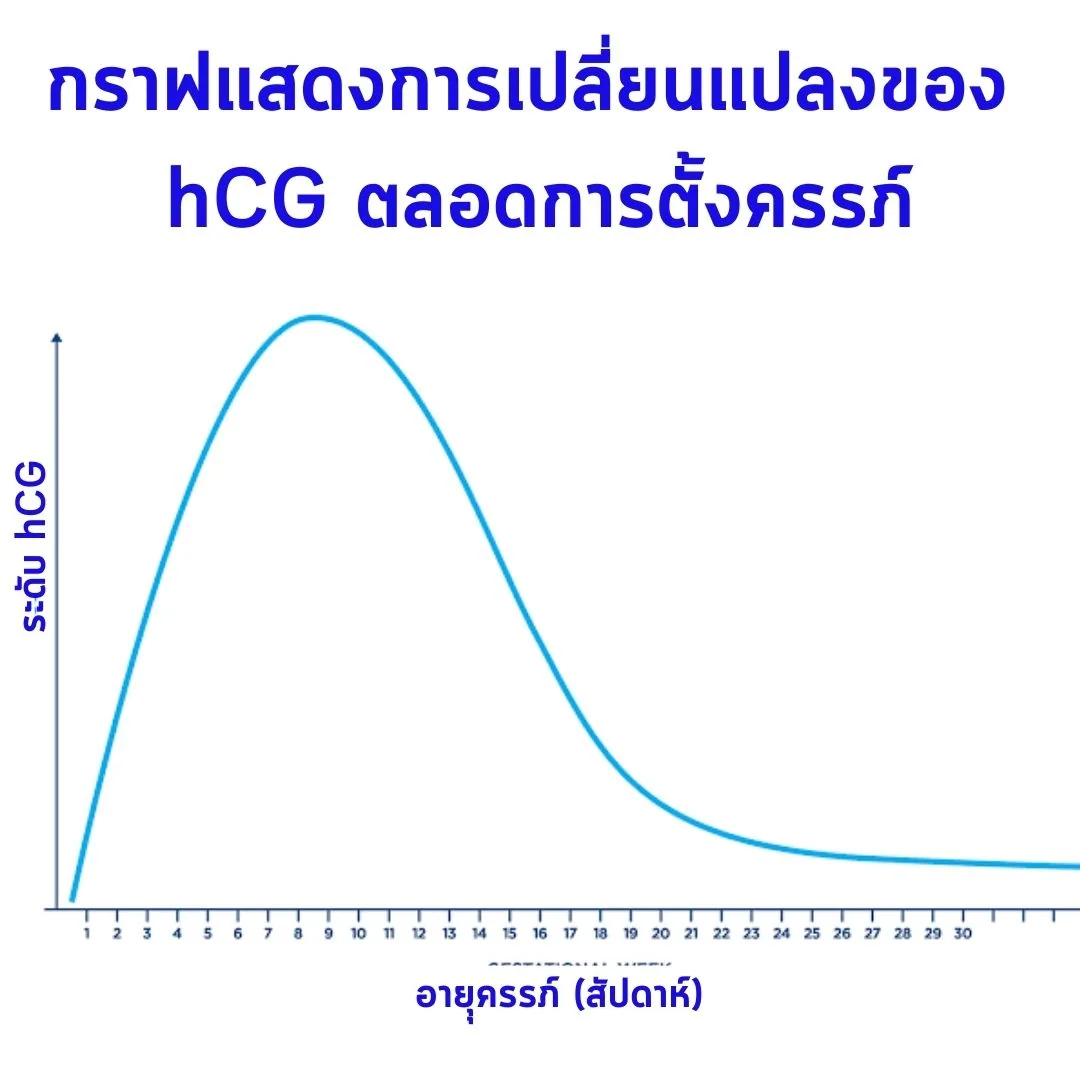
A graph of how hCG changes across a pregnancy. The vertical axis is the hCG level, the horizontal axis gestational age in weeks. The curve rises to a peak at about weeks 8 – 9, then falls away and flattens out towards the end of the graph.
  • Rising steadily through the first 10 weeks.
  • Coming down gradually, until 20 weeks.
  • Holding at a steady level from 20 weeks until delivery.
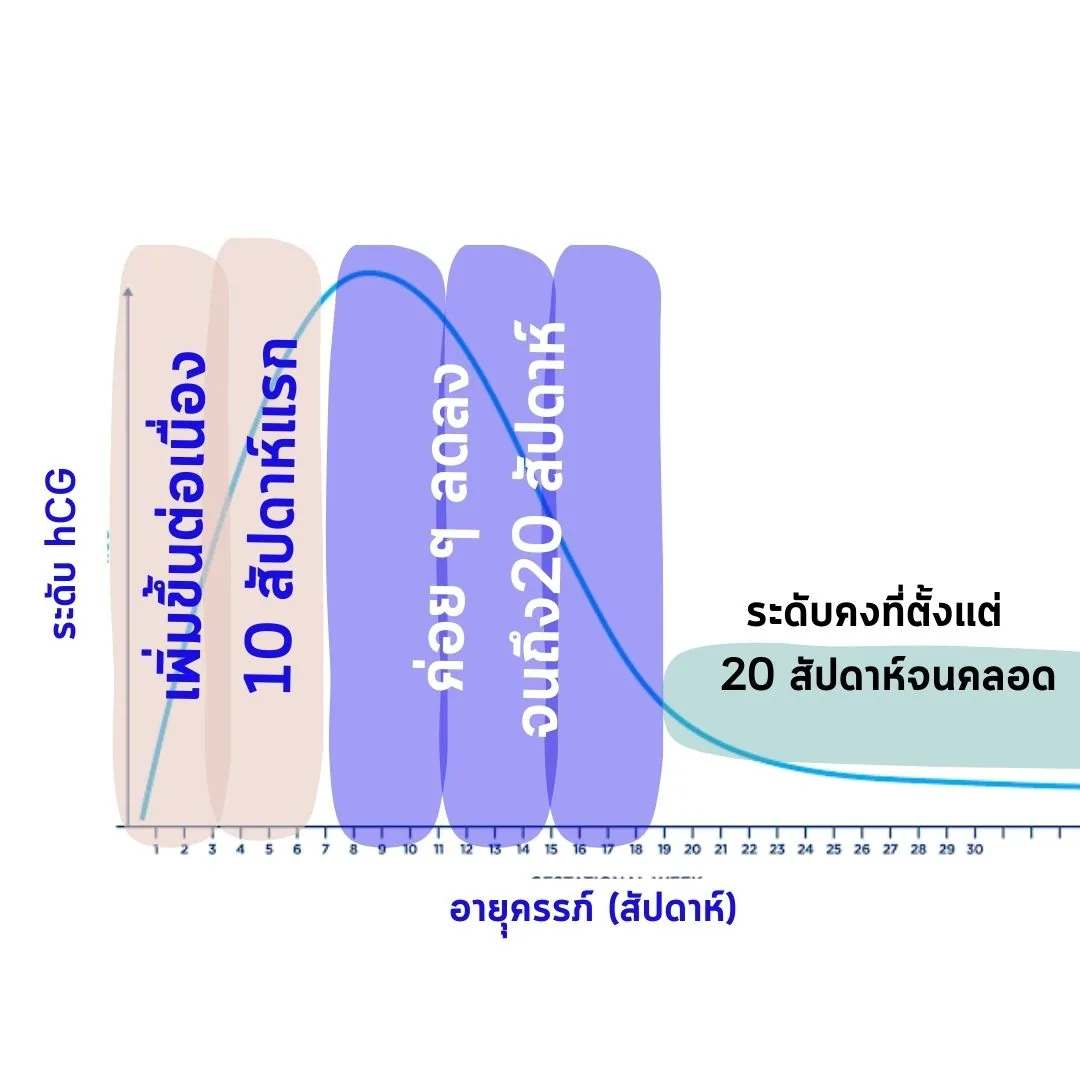
The same graph, this time divided into phases by coloured bands. The two pink bands are “rising steadily through the first 10 weeks”, the purple bands “coming down gradually, until 20 weeks”, and the pale green band on the right “holding at a steady level from 20 weeks until delivery”.

How fast hCG rises

As for how fast hCG rises: in most cases the value doubles every 48 hours — “hCG doubles every 48 hours.”

  • Used to follow a pregnancy through the early stretch after fertility treatment.
  • Helps in diagnosing an ectopic pregnancy.

The slide “hCG rises steadily through the first 10 weeks”, with the line in quotation marks “hCG doubles every 48 hours”, and the two uses that rate is put to.
The closing card — “With best wishes from”, the *Fertile with Dr. Pat* logo, and an illustration of a doctor holding a patient file.
The closing card — “With best wishes from”, the Fertile with Dr. Pat logo, and an illustration of a doctor holding a patient file.

With my best wishes — Dr. Patsama Vichinsartvichai

  • hCG
  • pregnancy hormone
  • embryo transfer
  • gestational age
  • ectopic pregnancy
  • placenta
  • mIU/ml
  • early pregnancy