 LIFE by Dr. Pat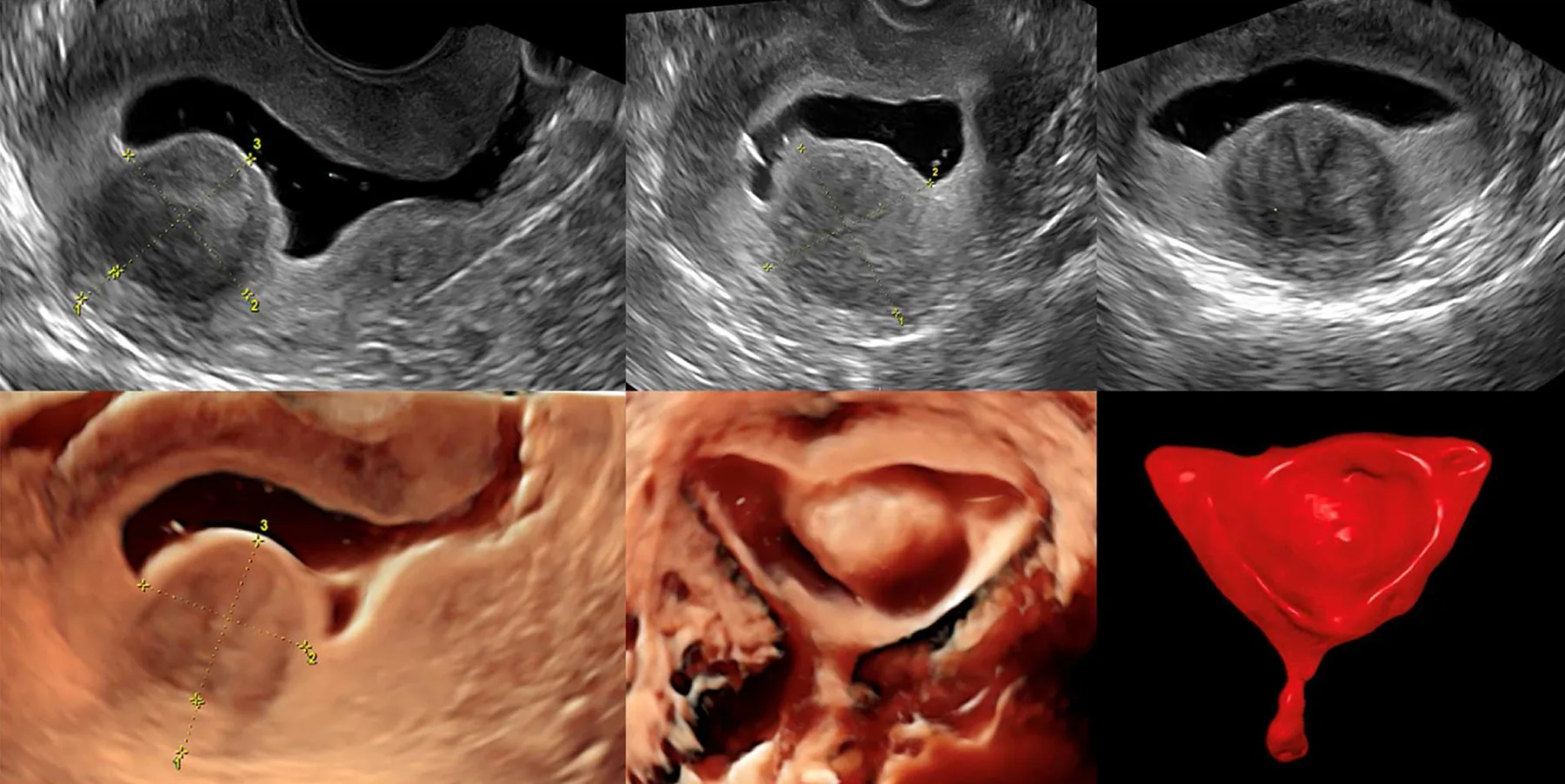
LIFE by Dr. Pat fertility clinic
Why assess the uterus and fallopian tubes with 3D ultrasound
At LIFE by Dr. Pat
Read the clinic's official page on this topic →
Abnormalities of the uterus and fallopian tubes account for almost 50% of infertility. Finding them accurately, so they can be corrected, is therefore an important starting point.
Causes of infertility in women
The uterus
- Fibroids
- Intrauterine adhesions
- Endometrial polyps
- Dysmorphic uterus
- Uterine septum
- Adenomyosis
The fallopian tubes
- Hydrosalpinx
- Endometriosis
- Pelvic adhesions following surgery
The ovaries
- Anovulation — PCOS, abnormal hypothalamic GnRH production, pituitary disorders
- Diminished ovarian function — DOR, POI, Turner syndrome, chemotherapy
Communication between embryo and mother
- Antiphospholipid antibody syndrome
- A shift in the window of receptivity
- Protein C / Protein S deficiency
Assessing the uterus
A proper assessment needs information on the uterine cavity, the endometrium, the myometrium and the external contour of the uterus. Several methods are available.
Laparoscopy + hysteroscopy
Laparoscopy combined with hysteroscopy is the reference standard for assessing uterine abnormalities.
Advantages
- Can diagnose and treat in the same session
- Also assesses tubal function
Drawbacks
- Expensive
- Requires hospital admission
- Leaves abdominal incisions
- Painful
- Not available at ordinary clinics
Two-dimensional transvaginal ultrasound
Two-dimensional ultrasound builds an image slice by slice. It can cover the whole uterus, but only if the operator moves the probe carefully across it, and it shows the uterus in just two planes — midline and transverse.
Advantages
- Covers the whole uterus
- Machines are widely available
- Inexpensive
- Non-invasive
- Allows measurement of distances, thickness and so on
Drawbacks
- Results depend on the operator's experience
- Stored images are hard to re-interpret later
- Limited scanning angles
- Shows only midline and transverse planes
- Accuracy is not as good as it should be
- Cannot assess the fallopian tubes
Three-dimensional transvaginal ultrasound
Three-dimensional ultrasound does not store single slices. It stitches hundreds of cross-sections into a volume, so the organ can be reviewed as a whole — much like CT or MRI — and re-sliced afterwards at any plane you wish.
Advantages
- Covers the whole uterus
- Results do not depend on who performed the scan
- Not expensive
- Non-invasive
- Allows measurements
- High accuracy
- Can assess the fallopian tubes at the same time
Drawbacks
- Requires additional training
- Machines are not yet widely available
Assessing the fallopian tubes
Testing tubal function before treatment matters. It shows whether IVF is necessary at all (when the tubes are blocked) — and even if you have decided on IVF from the start, the tubes still need checking: a hydrosalpinx markedly reduces the pregnancy rate after embryo transfer, and removing the affected tube laparoscopically restores it to normal.
So tubal assessment needs to answer two questions: are the tubes blocked, and is there a hydrosalpinx?
Laparoscopy + chromopertubation
Laparoscopy with dye instillation is the reference standard for the tubes. It also assesses the uterus and may treat what it finds in the same session.
Advantages
- Diagnoses and can treat in one session
Drawbacks
- Expensive
- Leaves abdominal incisions
- Painful
- Not available at ordinary clinics
Hysterosalpingography (HSG)
Radio-opaque contrast is injected into the uterus and X-rays are taken to assess the tubes, and the cavity as well.
Advantages
- Assesses both the cavity and the tubes
Drawbacks
- Bulky equipment, and painful
- Involves radiation exposure
- Lower accuracy
- Cannot show the external contour of the uterus
3D TVUS with contrast (HyCoSy)
Saline, an air–saline mixture or an ultrasound contrast agent is instilled, and the tubes are then assessed with three-dimensional ultrasound.
Advantages
- Assesses both the cavity and the tubes
- Not expensive
- No X-ray exposure
- Accuracy close to laparoscopy
Drawbacks
- Requires additional training
- Machines are not yet widely available
In summary
Three-dimensional transvaginal ultrasound
- Assesses the uterus, ovaries and tubes accurately
- Non-invasive
- Not expensive
- The investigation of choice for initial infertility evaluation
References
- Devine K, Dolitsky S, Ludwin I, Ludwin A. Modern assessment of the uterine cavity and fallopian tubes in the era of high-efficacy assisted reproductive technology. Fertility and Sterility. 2022;118:19-28.
- Jayaprakasan K, Ojha K. Diagnosis of congenital uterine abnormalities: practical considerations. Journal of Clinical Medicine. 2022;11(5):1251. doi:10.3390/jcm11051251